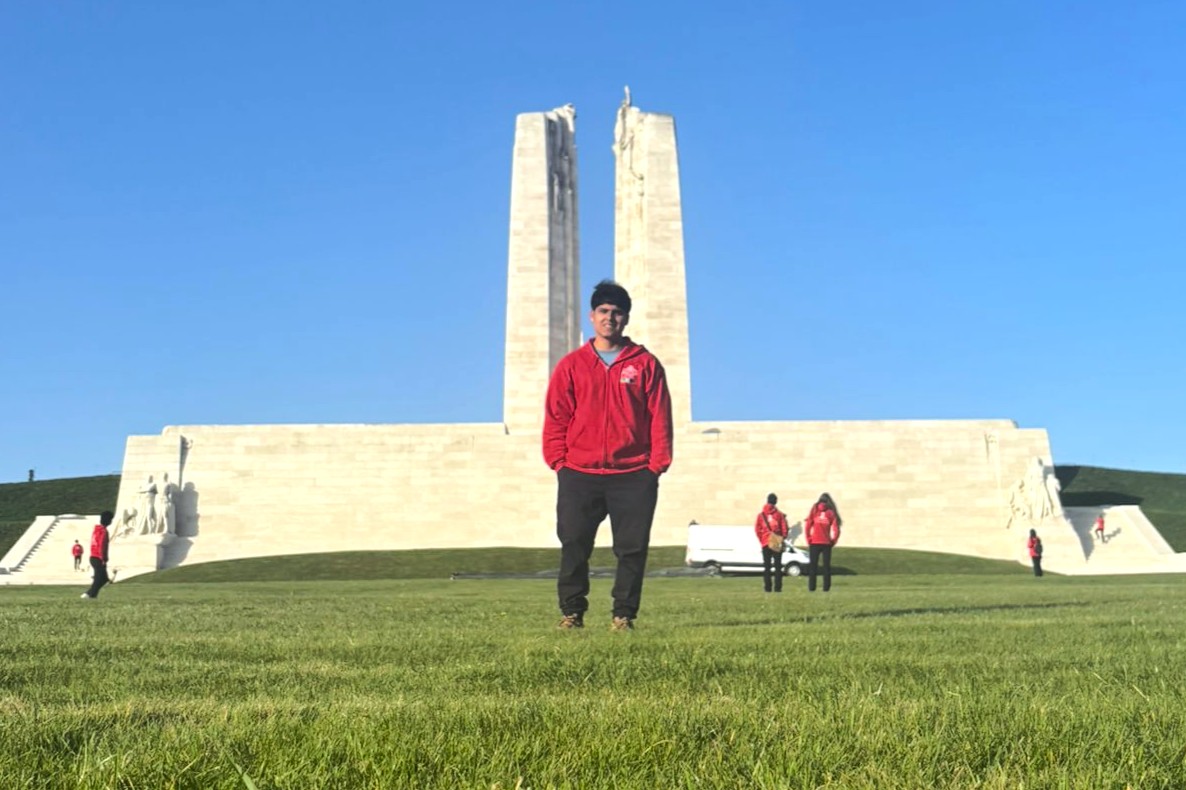
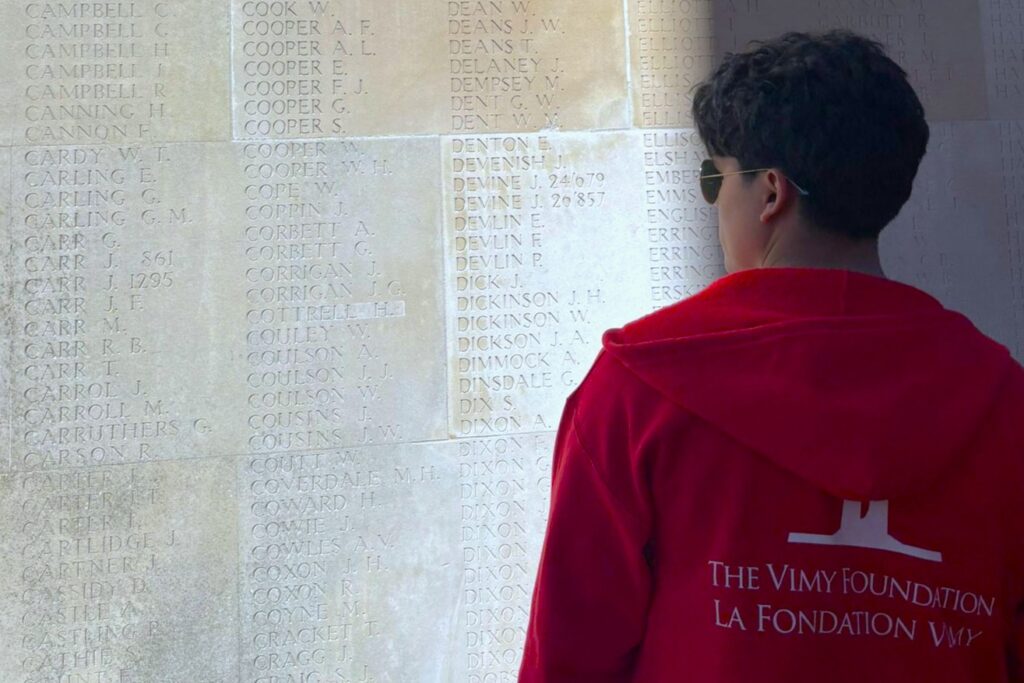
Army cadet Sgt. Paul Zambrano spent part of his Easter break walking through the battlefields, cemeteries, and tunnels where thousands of Canadian soldiers fought and died more than a century ago — an experience that changed how he understands both history and remembrance.
The Grade 12 student at Central Collegiate was selected as one of 20 Canadian youth and one of only six cadets nationwide for a week-long commemorative pilgrimage to Europe marking the 109th anniversary of the Battle of Vimy Ridge.
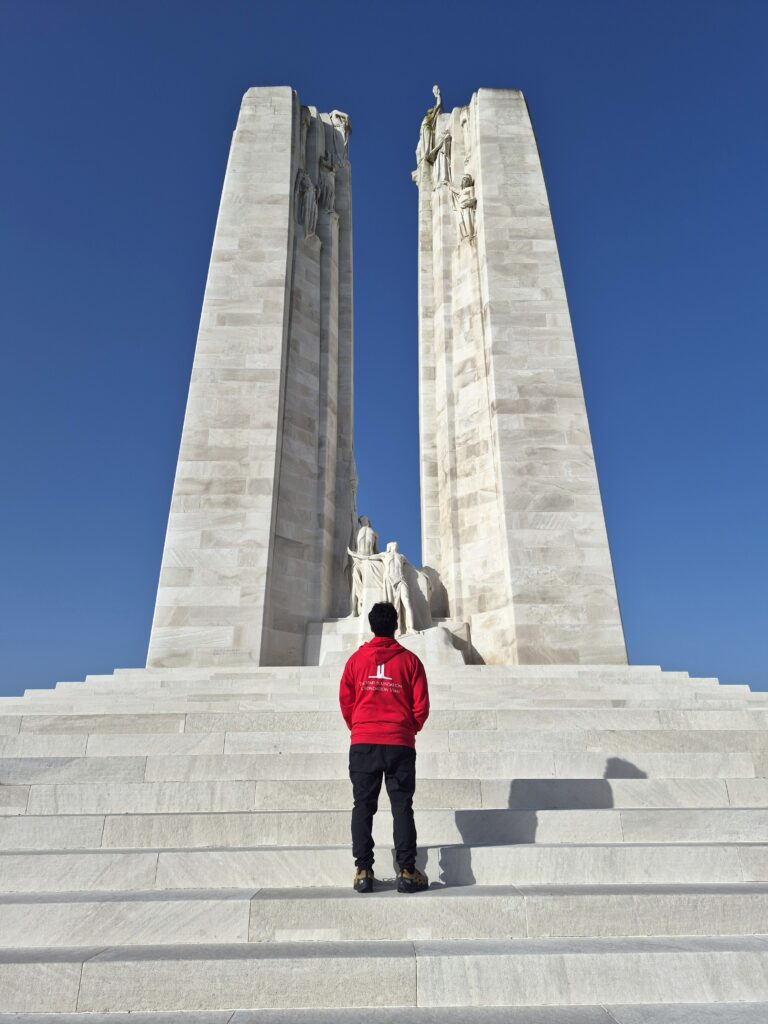
Representing 1856 Moose Jaw Army Cadets as Saskatchewan’s only participant, Zambrano travelled overseas from April 3 to 11 through a program organized by the Vimy Foundation. The tour included visits to Vimy Ridge, the Somme, Passchendaele, Beaumont-Hamel, Ypres, and several cemeteries and museums connected to the First World War.
“Well, I was honestly quite shocked,” Zambrano said of learning he had been selected. “I wasn’t entirely sure I was going to get in … when I got the email saying I had been chosen, it finally felt real. It was really exciting too because it was my first time going to Europe.”
Zambrano said he first learned about the opportunity through his commanding officer, Athena Cutts, who encouraged him to apply. The selection process included submitting a resume, recommendation letter, and video presentation about his community involvement and why he hoped to be chosen for the pilgrimage.
His application was supported by Central Collegiate history teacher Ray Rawlyk, who provided a reference letter highlighting Zambrano’s passion for Canadian and military history.
According to volunteer instructor Lyle Johnson, the selection process was highly competitive.
“It’s a pretty prestigious opportunity to be chosen for a trip like this,” Johnson said.
Johnson explained the importance of Vimy Ridge in Canadian history, noting the April 1917 battle marked the first time all four Canadian divisions fought together as a unified force.
“The Canadians, because of their preparation, were able to take it in three days,” Johnson said, referring to the ridge British and French forces had previously failed to capture. “That’s why Vimy Ridge is so important to Canada. It’s viewed as the moment the world stood back and recognized Canada as a full-fledged participant on the world stage.”
For Zambrano, the experience carried a much deeper impact than simply reading about the war in textbooks.
“Well, I would say it’s very different from sitting in a history class learning about numbers, dates, and battles than actually being there among the remnants of (war on) the battlefields, the trenches, and the tunnels,” he said. “Just being there makes you realize the sacrifice they all gave, not only for Canada, but for peace.”
Among the many battlefield visits throughout the trip, Zambrano said his time at Passchendaele left one of the deepest impressions. He chose to speak about Victoria Cross recipient George Harry Mullin, who was raised in Saskatchewan and earned Canada’s highest military honour during fighting near Passchendaele in October 1917.
“Being able to tell that story so close to where those events actually happened was a huge honour for me,” he said.
Zambrano also participated in the Vimy Ridge commemorative ceremony, where representatives from several countries gathered to honour those who fought during the battle.
“There were representatives from Canada, France, the United States, and several other countries,” he said. “The Canadian and French anthems were played, and we held a minute of silence. There were also French veterans holding flags and standing at attention during the ceremony.”
Zambrano said the experience reinforced the human side of remembrance.
“Remembrance is not only about remembering dates, battles, or numbers,” he reflected. “As our group leader Sean Graham told us, ‘We as a group put the human into the inhumane.’ When you visit those places, you realize the soldiers were real people like us who gave the ultimate sacrifice. The least we can do is understand them and share that knowledge with everybody else, not only about the destruction, but about their experiences.”
Aaron Walker
Reporter
Moose Jaw Express